Author name: Sravya das

Uncategorized

How to Create a Successful Social Media Strategy

Social media has become one of the most important tools for businesses to connect with customers, build brand awareness, and promote their products and services. Platforms such as Instagram, Facebook, LinkedIn, YouTube, and other social networks provide businesses with opportunities to communicate directly with their target audience. However, simply creating social media accounts and posting occasionally does not guarantee success. A business needs a clear plan that explains what to post, who to target, which platforms to use, and how to measure results. This plan is known as a social media strategy. A successful social media strategy helps businesses use their time, money, and resources effectively. It also provides direction and makes it easier to create consistent content. Whether you are a small business owner, freelancer, startup, or established company, the following steps can help you create an effective social media strategy. 1. Define Your Social Media Goals The first step in creating a successful social media strategy is deciding what you want to achieve. Without clear goals, it can be difficult to determine whether your social media efforts are successful. Your goals might include: Your goals should be specific and measurable whenever possible. For example, instead of saying, “I want more followers,” you could set a goal such as “I want to increase relevant followers over the next three months.” Clear goals provide direction for your content and campaigns. 2. Understand Your Target Audience Knowing your audience is one of the most important parts of social media marketing. Before creating content, identify the people you want to reach. Consider: For example, a business selling professional services to other businesses may find LinkedIn particularly useful, while a visually focused consumer brand may place greater emphasis on Instagram. Understanding your audience helps you create content that is relevant instead of posting randomly. 3. Research Your Competitors Competitor research can help you understand what is happening in your industry. Look at the social media accounts of businesses that offer similar products or services. Pay attention to: The goal is not to copy competitors. Instead, identify opportunities to create better, more useful, or more distinctive content. For example, if competitors mostly share promotional posts, you could differentiate your business by creating educational videos, tutorials, customer stories, or informative guides. 4. Choose the Right Social Media Platforms You do not need to be active on every social media platform. Trying to maintain too many accounts can make content creation difficult and reduce consistency. Choose platforms based on your target audience and business objectives. Instagram Instagram is particularly useful for visual content, Reels, Stories, products, lifestyle brands, and personal branding. Facebook Facebook can be useful for communities, local businesses, customer communication, events, and different forms of content. LinkedIn LinkedIn is valuable for professional networking, B2B marketing, thought leadership, recruitment, and professional services. YouTube YouTube can be effective for long-form educational videos, tutorials, product demonstrations, reviews, and entertainment. The best platform is not necessarily the most popular one. It is the platform where your target audience is most likely to engage with your business. 5. Optimize Your Social Media Profiles Once you select your platforms, make sure your profiles look professional and provide useful information. Your profile should generally include: Your bio should quickly explain what your business does and how it helps customers. A visitor should understand your business without having to search through dozens of posts. 6. Develop a Strong Brand Identity Consistency is important for building brand recognition. Your social media accounts should have a consistent visual and communication style. Consider creating simple brand guidelines covering: For example, a professional consulting company may use a clear, informative, and professional tone, while a lifestyle brand may use a more casual and conversational style. A consistent identity helps customers recognize your content more easily. 7. Create Valuable Content Content is the foundation of social media marketing. Instead of creating content only to promote products, focus on providing value to your audience. Useful content can include: For example, a digital marketing professional could create posts explaining SEO, social media marketing, Google Ads, content marketing, and common marketing mistakes. The purpose is to make your social media account useful enough that people have a reason to follow it. 8. Create a Content Calendar A content calendar helps you plan your posts in advance. Instead of deciding what to publish every day, create a weekly or monthly plan. A simple content calendar can include: Day Content Type Monday Educational post Tuesday Story or poll Wednesday Short video Thursday Industry tip Friday Promotional content Saturday Behind-the-scenes Sunday Community or inspirational content Your schedule should be realistic. Posting consistently is usually more useful than creating an unrealistic schedule that becomes difficult to maintain. 9. Use Different Content Formats Social media platforms offer many different content formats. Businesses can experiment with: Different formats can appeal to different types of users. For example, a complex topic might work well as a carousel, while a quick tip could be presented as a short video. Experimentation helps you understand what your audience responds to. 10. Focus on Storytelling People often remember stories more easily than advertisements. Storytelling can make your brand more relatable and memorable. You can tell stories about: For example, rather than simply saying that your product is high quality, you can explain how it was developed and what problem it was designed to solve. Authentic storytelling can help create stronger connections with your audience. 11. Maintain a Consistent Posting Schedule Consistency is an important part of social media success. If you post regularly, your audience has more opportunities to interact with your content. However, consistency does not mean posting constantly. Choose a schedule that you can maintain over the long term. You can use scheduling tools to prepare content in advance. This can save time and make it easier to maintain a regular publishing routine. 12. Engage With Your Audience Social media should be a two-way conversation. Do not simply publish posts and leave. Respond to: You can also encourage
Uncategorized

How Instagram Marketing Can Help Small Businesses

In today’s digital world, social media has become an important part of business growth. Among the many social media platforms available, Instagram has become a powerful tool for small businesses to promote their products and services, connect with customers, and build a recognizable brand. With its focus on photos, videos, Reels, Stories, and visual storytelling, Instagram gives businesses an opportunity to reach potential customers in an engaging and creative way. For small businesses with limited marketing budgets, Instagram can be especially useful. It allows businesses to showcase what they offer, communicate directly with customers, build trust, and create awareness without depending entirely on traditional advertising methods. However, simply creating an Instagram account is not enough. Businesses need to use the platform strategically. A clear profile, consistent content, engaging visuals, meaningful communication, and regular analysis can help turn an Instagram account into an effective marketing channel. This article explores how Instagram marketing can help small businesses grow and how business owners can use the platform effectively. 1. Increases Brand Awareness One of the biggest advantages of Instagram marketing is its ability to increase brand awareness. Small businesses often struggle to compete with large companies because they have smaller advertising budgets and fewer resources. Instagram provides an opportunity to introduce your business to new audiences through visual content. Businesses can share: When people repeatedly see your business name, logo, products, and content, they can become more familiar with your brand. For example, a small bakery can post attractive pictures of cakes, short videos showing the baking process, customer celebrations, and new product announcements. Over time, these posts can help people remember the bakery when they need a cake. 2. Helps Reach the Right Audience Instagram allows businesses to connect with audiences based on interests, location, and other relevant characteristics. This can be particularly useful for small businesses because they do not necessarily need to reach everyone. They need to reach people who are most likely to become customers. For example, a local fitness business can create content related to fitness tips and target people interested in health and exercise. A handmade jewellery business can create content for people interested in fashion, accessories, and handmade products. Understanding your target audience helps you create content that is relevant to their interests and needs. 3. Provides an Affordable Marketing Opportunity Traditional advertising can be expensive for small businesses. Television advertisements, newspaper advertisements, billboards, and other offline marketing methods may require significant budgets. Instagram provides both organic and paid marketing opportunities. Organic content can be created and shared without paying for every impression. Businesses can also use Instagram advertising when they want to reach a larger or more specific audience. A small business can start with a modest advertising budget, test different campaigns, and measure the results before increasing its investment. This flexibility makes Instagram attractive to businesses that want to manage their marketing expenses carefully. 4. Builds a Strong Brand Identity Instagram is highly visual, making it an excellent platform for developing a recognizable brand identity. Businesses can maintain consistency through: For example, a skincare brand might use a consistent visual style across its product photographs, educational posts, and Reels. When your content has a recognizable style, followers can identify your business more easily when it appears in their feed. A strong brand identity can make a small business look more professional and memorable. 5. Showcases Products and Services Instagram allows businesses to visually demonstrate what they offer. Instead of simply telling customers about a product, businesses can show it through photographs and videos. A clothing business can showcase different outfits. A restaurant can share food photographs and preparation videos. A salon can share hairstyle inspiration and service information. A digital marketing professional can share marketing tips, projects, and educational content. Showing products and services creatively can help potential customers understand what makes your business different. 6. Builds Customer Trust Trust is one of the most important factors in purchasing decisions. Customers want to know that a business is genuine before spending their money. Instagram gives businesses an opportunity to show the people and processes behind the brand. You can share: This type of content can make a business feel more authentic and approachable. Instead of presenting only polished advertisements, showing real experiences can help customers understand the personality behind the business. 7. Encourages Direct Customer Communication Instagram is not only a platform for publishing content. It can also be used for communication. Customers can interact with businesses through comments, messages, Story replies, and other engagement features. Businesses can use these interactions to: Responding to customers promptly and professionally can create a positive experience. When customers feel that a business listens to them, they may be more likely to develop a stronger connection with the brand. 8. Reels Can Increase Content Reach Short-form video content has become an important part of social media marketing. Instagram Reels can help businesses present information in a short and engaging format. Small businesses can create Reels about: The key is not simply to create videos for the sake of creating videos. Each Reel should have a purpose and provide something useful, interesting, or entertaining to the intended audience. 9. Stories Help Maintain Regular Engagement Instagram Stories are useful for sharing temporary, everyday content. Businesses can use Stories to provide quick updates such as: Stories can make a business feel active and accessible. For example, a small restaurant can use Stories to announce the day’s special menu. A clothing store can show newly arrived products. A service provider can answer common customer questions. 10. Drives Website Traffic Instagram can also support a business website by directing interested users to relevant pages. Businesses can encourage users to visit their website for: A clear call to action can guide followers toward the next step. For example, instead of simply posting information about a service, a business can encourage interested users to visit its website to learn more or submit an inquiry. 11. Helps Generate Leads Instagram can become a useful source

Uncategorized

How to Build a Strong Online Presence for Your Business

In today’s digital world, having a strong online presence is no longer optional for businesses. Whether you are running a small local business, a growing startup, a service-based company, or an established brand, your customers are likely searching for information about you online before making a decision. A professional online presence helps your business become more visible, build credibility, connect with customers, and generate new opportunities. Building an online presence is more than simply creating a website or opening a social media account. It involves developing a consistent digital identity across different platforms and regularly providing useful information to your target audience. A successful online presence combines a professional website, search engine optimization, social media marketing, valuable content, online reviews, local visibility, and consistent communication. This article explains the important steps you can follow to build a strong and effective online presence for your business. 1. Define Your Target Audience Before creating your online presence, you need to understand who you want to reach. Your target audience is the group of people most likely to be interested in your products or services. Think about their age, location, interests, needs, problems, buying habits, and online behavior. Understanding these factors helps you create content and marketing campaigns that are relevant to them. For example, a digital marketing agency targeting local business owners may create content about SEO, Google Ads, social media marketing, and lead generation. On the other hand, a clothing business may focus on fashion content, product images, styling ideas, and customer experiences. When you clearly understand your audience, it becomes easier to decide what to post, where to post, and how to communicate. 2. Create a Professional Website Your website is one of the most important parts of your online presence. It acts as a central destination where potential customers can learn about your business, services, products, experience, and contact information. A professional website should have a clean design, simple navigation, mobile-friendly layout, fast loading speed, and clear information. Important pages may include: Your homepage should immediately communicate what your business offers and why customers should choose you. Include clear calls to action such as “Contact Us,” “Get a Quote,” “Book Now,” or “Learn More.” Your contact information should also be easy to find. Depending on your business, you can include a phone number, email address, contact form, social media links, and location information. A website should not remain static. Regularly updating it with useful information, new projects, services, and blog content can help keep it relevant. 3. Invest in Search Engine Optimization Search Engine Optimization, commonly known as SEO, helps your website become more visible when people search for relevant terms on search engines. For example, if you provide digital marketing services in a particular city, you may want your website to appear when potential customers search for relevant digital marketing services in that area. SEO involves several activities, including: However, SEO should not be about filling a page with keywords. The primary goal should be to provide useful and relevant information to users. A strong SEO strategy takes time, but it can help businesses attract people who are already searching for their products or services. 4. Create and Optimize Your Google Business Profile For eligible local and service-area businesses, a Google Business Profile can be an important part of online visibility. It allows businesses to manage how they appear on Google Search and Google Maps. Your profile should contain accurate and complete information, including: Google recommends keeping business information complete and accurate. It also highlights reviews, photos, and updated information as useful parts of maintaining a strong local presence. If your business is eligible, verify your profile and keep it updated. You can also respond to customer reviews and add relevant photos and posts. Remember that Google Business Profile eligibility depends on how your business interacts with customers; online-only businesses generally aren’t eligible for a standard Business Profile. 5. Build a Strong Social Media Presence Social media gives businesses an opportunity to communicate directly with their audience. Depending on your target customers, you can choose platforms that are most relevant to your business. Instead of trying to be active everywhere, focus on platforms where your audience is actually present. Your social media profiles should have: Your content should provide value rather than constantly trying to sell something. For example, you can share: Consistency is more important than posting a large amount of content for a short period and then disappearing. 6. Develop a Consistent Brand Identity A strong brand should look and feel consistent across all digital platforms. Your website, social media profiles, advertisements, email communications, and other digital channels should use a consistent visual identity and tone of communication. Important branding elements include: Consistency helps customers recognize your business more easily. For example, if your website uses a professional and modern style while your social media pages look completely different, customers may find the brand less recognizable. Your goal should be to create a clear identity that customers can remember. 7. Create Valuable Content Content marketing is one of the most effective ways to build authority and attract potential customers. Instead of only promoting your products or services, create content that answers the questions your audience is asking. You can create: For example, a digital marketer could publish articles such as “How SEO Helps Small Businesses,” “Benefits of Social Media Marketing,” or “How to Create a Digital Marketing Strategy.” Useful content can demonstrate your knowledge and give potential customers a reason to trust your business. 8. Use Online Reviews and Testimonials Customer reviews can strongly influence people’s purchasing decisions. When potential customers see positive experiences from other customers, they may feel more confident about choosing your business. Encourage genuine customers to share honest feedback where appropriate. Respond professionally to reviews, including negative ones. A negative review does not necessarily have to damage your reputation. A polite and helpful response can demonstrate that your business listens to customers and takes feedback seriously. Google specifically recommends responding to

Uncategorized

Best Digital Marketer in Manjeri, Malappuram

In today’s competitive business environment, having a strong online presence is no longer optional. Whether it is a small local business, a growing startup, a personal brand, or an established company, digital marketing plays an important role in reaching customers and building long-term visibility. Businesses in Manjeri and across Malappuram are increasingly looking for effective ways to promote their products and services online. Sravya Das is a digital marketer serving businesses with a focus on SEO, social media marketing, Google Ads, Meta Ads, and content management. With an interest in combining creativity with digital marketing strategies, Sravya aims to help businesses improve their online presence and connect with the right audience. For businesses searching for a digital marketer in Manjeri, Malappuram, having a professional who understands different areas of digital marketing can make online promotion more organized and effective. Who Is Sravya Das? Sravya Das is a digital marketing professional based in the Malappuram region, with a focus on helping businesses understand and use digital platforms effectively. Digital marketing is a broad field that includes several activities such as search engine optimization, social media marketing, paid advertising, content creation, website optimization, and online brand building. Rather than depending on a single platform, a good digital marketing strategy considers how different channels can work together. Sravya’s professional focus includes SEO, Social Media Marketing, Google Ads, Meta Ads, and Content Management. These services can help businesses establish their online presence, communicate with potential customers, and build a stronger digital identity. The goal is not simply to make a business visible online. Effective digital marketing should focus on reaching relevant audiences, communicating value clearly, and creating meaningful opportunities for business growth. Why Digital Marketing Matters for Businesses in Manjeri Manjeri is an important commercial centre in Malappuram, with businesses operating across different industries. Local businesses increasingly need to compete not only offline but also on search engines, social media platforms, and other digital channels. When people need a product or service, one of the first things they may do is search online. They may look for a nearby business, compare different options, read reviews, visit websites, or check social media pages before making a decision. This creates an important opportunity for local businesses. A strong digital marketing strategy can help businesses: For this reason, working with a digital marketer who understands the importance of both local and broader online visibility can be valuable for businesses in Manjeri and Malappuram. SEO Services for Better Online Visibility Search Engine Optimization, commonly known as SEO, is one of the most important parts of digital marketing. SEO focuses on improving a website’s visibility in search engine results for relevant searches. Instead of depending entirely on paid advertising, businesses can work toward building organic visibility through useful content, keyword optimization, technical improvements, and a better user experience. For a local business, local SEO can be particularly important. For example, customers may search for phrases related to a particular service combined with a location. A business with an optimized website and strong local presence has a better opportunity to appear when potential customers are looking for relevant services. Sravya Das focuses on SEO as one of the key areas of digital marketing. The approach can include understanding relevant search terms, creating useful website content, optimizing pages, and improving the overall online presence of a business. SEO is generally a long-term process. Consistent optimization and useful content can help businesses develop sustainable online visibility over time. Social Media Marketing Social media has become an important communication channel for modern businesses. Platforms such as Instagram and Facebook allow businesses to showcase their products, share information, communicate with customers, and build a recognizable brand identity. However, simply posting content regularly is not enough. Businesses need a clear social media strategy. A good social media strategy considers: Sravya Das provides social media marketing as part of her digital marketing services, with an emphasis on helping businesses develop a stronger presence across social platforms. For local businesses in Manjeri and Malappuram, social media can be particularly useful for building awareness among nearby audiences while also allowing brands to reach customers beyond their immediate location. Google Ads for Faster Reach Google Ads can help businesses reach people who are actively searching for products and services. For example, a person searching for a particular service may already have an intention to find a provider. A carefully planned Google Ads campaign can help a business appear in front of relevant users. Google Ads campaigns can be planned around specific objectives, locations, keywords, audiences, and budgets. For businesses in Manjeri, location-focused advertising can help make campaigns more relevant to the local market. However, successful paid advertising requires proper planning. Choosing relevant keywords, writing effective advertisements, creating suitable landing pages, monitoring conversions, and optimizing campaigns are all important. Sravya Das includes Google Ads among her digital marketing services, helping businesses explore paid advertising as part of their overall online marketing strategy. Meta Ads for Business Promotion Meta advertising can also be a useful tool for businesses that want to reach specific audiences on social media. Meta Ads can be used for different marketing objectives, including brand awareness, website traffic, engagement, and lead generation, depending on the campaign setup. For businesses with visually appealing products or services, social advertising can provide opportunities to introduce their brand to potential customers. A successful campaign starts with understanding the audience. Before creating advertisements, it is important to consider: Who is the target customer? What problem does the product or service solve? What message will attract attention? What action should the customer take? Answering these questions can help create more focused advertising campaigns. Content Management and Digital Branding Content is one of the foundations of digital marketing. Websites, blogs, social media posts, advertisements, videos, and other forms of online communication all depend on effective content. Good content should provide value while communicating a brand’s identity. For example, a business website should clearly explain what the company offers, who it serves, and why customers

Uncategorized

The Role of Google Ads in Business Growth

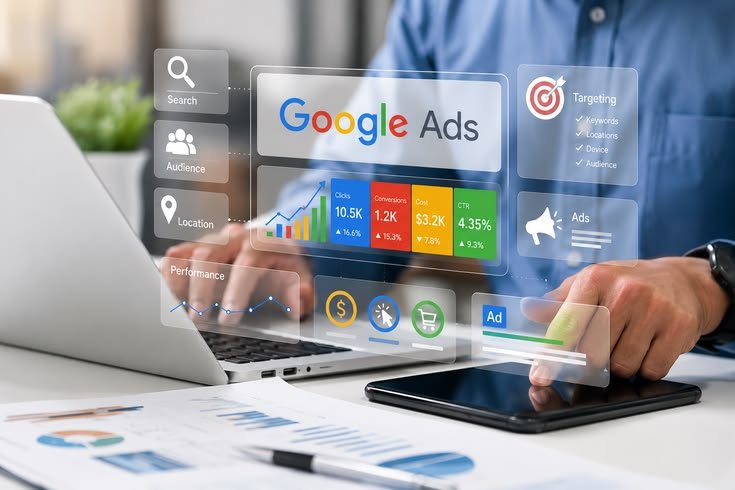
In today’s digital world, having an online presence is essential for businesses of all sizes. Customers increasingly use search engines to discover products, services, brands, and solutions to their problems. While organic search engine optimization (SEO) is an important part of digital marketing, businesses can also use paid advertising to reach potential customers quickly. One of the most powerful platforms for this is Google Ads. Google Ads is an online advertising platform that allows businesses to promote their products and services across Google’s search engine and other Google properties. When used strategically, Google Ads can help businesses increase website traffic, generate leads, improve brand visibility, and drive sales. For small businesses, startups, and established companies, Google Ads provides an opportunity to compete for the attention of customers who are actively searching for what they offer. However, successful advertising requires more than simply creating an advertisement. Businesses need proper keyword research, compelling ad copy, relevant landing pages, audience targeting, budget management, and continuous optimization. This article explores the role of Google Ads in business growth and explains how businesses can use it effectively as part of a broader digital marketing strategy. What Is Google Ads? Google Ads is a pay-per-click (PPC) advertising platform. In simple terms, businesses can create advertisements that appear when people search for specific keywords or interact with content across Google’s advertising network. For example, imagine someone searches for “digital marketing agency near me.” Businesses offering digital marketing services can create Google Ads campaigns targeting relevant search terms. Their advertisements may appear prominently in search results, helping them reach people who are already interested in their services. One of the major advantages of Google Ads is that advertisers can control several aspects of their campaigns, including their budget, keywords, target audience, locations, advertising schedule, and campaign goals. Businesses generally pay based on interactions such as clicks, depending on the campaign and bidding strategy. This makes Google Ads different from traditional advertising methods, where businesses may pay for exposure without knowing exactly how many interested people will respond. Why Google Ads Is Important for Business Growth Google Ads can play an important role in helping businesses reach their marketing objectives. From increasing visibility to generating leads, paid search advertising can support businesses at different stages of growth. 1. Provides Immediate Online Visibility One of the biggest benefits of Google Ads is the ability to gain visibility quickly. SEO can take time because websites need to build authority, improve content, and earn organic rankings. Google Ads, on the other hand, can place relevant advertisements in front of potential customers soon after a campaign is launched and approved. This is particularly useful for new businesses that do not yet have strong organic search visibility. For example, a newly launched local business may have difficulty appearing organically for competitive keywords. A well-planned Google Ads campaign can help the business gain visibility while it continues developing its long-term SEO strategy. 2. Reaches Customers With High Purchase Intent Google Ads can be especially powerful because it can reach people who are actively searching for a product or service. Consider the difference between someone who searches for “best running shoes” and someone who searches for “buy running shoes online.” The second search may indicate stronger purchase intent. By targeting relevant search queries, businesses can connect with potential customers at a time when they may already be considering a purchase. This makes Google Ads particularly valuable for businesses that want to generate qualified leads and sales rather than simply increase general awareness. 3. Helps Generate Quality Leads Lead generation is an important goal for many businesses. A lead could be someone who fills out a contact form, requests a quotation, calls a business, books a consultation, or submits an inquiry. Google Ads can help businesses target people who are actively looking for specific solutions. For example, a web design company could advertise for keywords related to website development. Someone searching for “professional website design services” could click the advertisement and visit the company’s landing page. If the landing page provides useful information and a clear call to action, the visitor may become a potential client. Therefore, Google Ads can support the complete journey from search to website visit to lead generation. 4. Supports Sales and Revenue Growth The ultimate goal of many marketing campaigns is business growth and revenue generation. Google Ads can contribute to sales by connecting businesses with customers who are searching for their products or services. E-commerce businesses can use shopping and other advertising campaigns to showcase products, while service-based businesses can focus on generating inquiries and bookings. However, advertising alone does not guarantee sales. The entire customer experience matters. A successful campaign usually requires: When these elements work together, Google Ads can become an effective source of business revenue. 5. Provides Targeted Advertising Another major advantage of Google Ads is its targeting capabilities. Businesses can define who they want to reach based on factors such as: Local businesses can particularly benefit from location targeting. For example, a restaurant in Manjeri does not necessarily need to advertise to people across the entire country. It can focus its advertising on people in relevant nearby locations. This can reduce wasted advertising spend and help businesses focus on audiences that are more likely to become customers. 6. Helps Local Businesses Attract Customers Local businesses can use Google Ads to reach customers in specific geographic areas. Businesses such as restaurants, salons, clinics, educational institutions, real estate companies, repair services, and professional service providers can benefit from location-focused advertising. Imagine someone searching for “best salon near me.” A local salon that has an appropriately targeted advertising campaign may have an opportunity to appear in front of that potential customer. Local advertising can therefore help businesses increase calls, website visits, inquiries, and physical visits. 7. Provides Measurable Results Traditional advertising can sometimes make it difficult to determine exactly how many people responded to an advertisement. Digital advertising provides much more measurable data. Google Ads allows advertisers to monitor

Uncategorized

Common Digital Marketing Mistakes Businesses Should Avoid

Digital marketing has become an essential part of modern business. Customers use search engines, social media, websites, online reviews, email, and digital platforms to discover businesses, compare products, and make purchasing decisions. Because of this shift in customer behavior, businesses of all sizes are investing in digital marketing to increase visibility, attract customers, build relationships, and grow revenue. However, simply being active online does not guarantee success. Many businesses make common digital marketing mistakes that reduce their visibility, waste their marketing budget, and prevent them from achieving their goals. Some businesses post content without a strategy, while others focus too much on selling and not enough on providing value. Others may ignore SEO, fail to understand their audience, or stop their campaigns before giving them enough time to produce meaningful results. Understanding these mistakes can help businesses build more effective digital marketing strategies. In this article, we will discuss the most common digital marketing mistakes businesses should avoid and explain how to improve their approach. 1. Not Having a Clear Digital Marketing Strategy One of the biggest mistakes businesses make is starting digital marketing without a clear plan. Creating social media accounts, publishing random posts, or running advertisements without defined goals can lead to wasted time and money. A digital marketing strategy should clearly identify what the business wants to achieve. Goals may include increasing brand awareness, generating leads, improving website traffic, increasing sales, or building customer loyalty. A good strategy should also identify the target audience, marketing channels, content approach, budget, timeline, and key performance indicators. How to Avoid This Mistake Before starting a campaign, define specific and measurable goals. Create a plan that connects digital marketing activities with broader business objectives. Review the strategy regularly and make improvements based on performance. 2. Not Understanding the Target Audience Marketing becomes much more effective when businesses understand who they are trying to reach. Some businesses create content based on what they want to say rather than what their customers want to know. This can result in content that receives little engagement or generates few leads. Businesses should understand their customers’ needs, interests, challenges, preferences, and online behavior. For example, the marketing strategy for a college-targeted service will be different from the strategy for a professional B2B service. How to Avoid This Mistake Create a clear customer profile. Research your audience through surveys, customer conversations, website analytics, social media insights, and market research. Use this information to create content that solves real customer problems. 3. Trying to Be Active on Every Platform Another common mistake is trying to maintain a presence on every social media platform. Businesses sometimes believe that being everywhere will automatically increase their reach. In reality, managing too many platforms can reduce content quality and consistency. Each social media platform has its own audience, content formats, and communication style. How to Avoid This Mistake Choose platforms based on where your target audience spends time and where your business can provide value. It is better to maintain two or three platforms effectively than to have inactive profiles everywhere. 4. Ignoring Search Engine Optimization Search Engine Optimization, or SEO, is an important part of digital marketing. Yet many businesses ignore it because they expect immediate results. SEO helps websites become more visible in search engine results for relevant searches. Without proper optimization, even a well-designed website may struggle to attract organic traffic. How to Avoid This Mistake Focus on relevant keywords, useful content, website structure, page speed, mobile usability, internal linking, and other important SEO practices. Remember that SEO is generally a long-term process and requires continuous improvement. 5. Focusing Only on Selling Businesses naturally want to increase sales, but constantly promoting products or services can make social media content feel repetitive and overly promotional. Customers also want information, entertainment, education, inspiration, and solutions to their problems. How to Avoid This Mistake Follow a balanced content strategy. Share educational content, helpful tips, industry insights, customer stories, behind-the-scenes content, and engaging posts alongside promotional content. The goal should be to build a relationship with your audience rather than simply asking them to buy something. 6. Creating Low-Quality Content Content is one of the most important elements of digital marketing. However, producing large amounts of content without focusing on quality can damage a brand. Poorly written articles, unclear graphics, repetitive posts, misleading headlines, or videos with poor communication may discourage people from engaging with the business. How to Avoid This Mistake Focus on creating useful, accurate, original, and audience-focused content. Every piece of content should have a clear purpose and provide some form of value. Quality should always be more important than simply increasing the number of posts. 7. Being Inconsistent Consistency is essential for building an online presence. Some businesses post regularly for a few weeks and then disappear for several months. This makes it difficult to maintain audience engagement and brand recognition. Inconsistency can also make a business appear less active or organized. How to Avoid This Mistake Create a realistic content calendar. Decide how often you can consistently publish content and follow that schedule. You do not need to post several times every day. A manageable schedule maintained over a long period is usually more useful than short bursts of activity. 8. Ignoring Mobile Users A large portion of online activity takes place on smartphones. If a website is difficult to use on a mobile device, visitors may leave quickly. Common mobile problems include small text, slow loading, difficult navigation, buttons that are hard to click, and layouts that do not adjust properly to smaller screens. How to Avoid This Mistake Make sure your website is mobile-friendly. Test pages on different screen sizes and ensure that visitors can easily read information, navigate the site, and complete important actions. 9. Having a Poor Website A website is often the central destination for digital marketing campaigns. A business may successfully attract visitors through social media or advertising, but if the website is confusing, outdated, slow, or difficult to navigate, those

Uncategorized

How to Build a Strong Brand on Social Media

In today’s digital world, social media has become one of the most powerful tools for building a brand. Whether you are a small business owner, entrepreneur, freelancer, startup, or established company, social media provides an opportunity to connect directly with your target audience and build a recognizable identity. A strong social media brand is more than simply having an attractive profile or gaining thousands of followers. It is about creating a clear identity, communicating consistently, providing value, understanding your audience, and building trust over time. When people recognize your brand, understand what you offer, and trust your content, they are more likely to become customers and recommend your business to others. Building a strong brand on social media requires planning and consistency. You need to understand who you are trying to reach, what makes your brand different, what type of content your audience wants, and how you can communicate your message effectively. This article explains the most important steps for building a strong and successful brand on social media. What Is Social Media Branding? Social media branding is the process of creating and maintaining a consistent identity for a business or individual across social media platforms. It includes your profile name, logo, colors, images, writing style, content, tone of voice, values, and the way you communicate with your audience. For example, when someone sees a social media post from a well-established brand, they may recognize it even before reading the brand name. This recognition happens because the business maintains a consistent visual identity and communication style. A strong social media brand makes your business easier to remember and helps you create a stronger relationship with your audience. 1. Define Your Brand Identity The first step in building a strong social media brand is understanding who you are as a brand. Before creating posts, ask yourself: Your answers should guide your social media activities. For example, if your brand provides digital marketing services, your identity might focus on helping small businesses improve their online presence and attract customers. Having a clear identity makes it easier to decide what to post and how to communicate. 2. Know Your Target Audience A brand cannot effectively communicate with everyone. You need to understand the specific people you want to reach. Your target audience may be defined by factors such as age group, location, interests, profession, needs, purchasing behavior, and challenges. Understanding your audience allows you to create content that is relevant to them. For example, a business selling educational services may create content for students and parents, while a digital marketing consultant may create content specifically for business owners and entrepreneurs. When your content addresses the real questions and problems of your audience, people are more likely to engage with your brand. 3. Choose the Right Social Media Platforms You do not need to be active on every social media platform. Different platforms attract different audiences and support different types of content. Therefore, choose platforms based on your target audience and business objectives. For example: Instead of trying to maintain every platform, focus on the channels where your audience is most active. 4. Create a Professional Profile Your social media profile is often the first point of contact between your brand and a potential customer. Make sure your profile clearly communicates who you are and what you offer. Important profile elements include: Your bio should answer a simple question: Why should someone follow or contact your brand? Avoid filling your profile with unnecessary information. Keep your message clear, professional, and easy to understand. 5. Develop a Consistent Visual Identity Visual consistency is one of the most important elements of social media branding. Your audience should be able to recognize your content quickly. Choose a consistent visual style for your brand. This can include: For example, if you use the same color combination and design style across your posts, your content will look more connected and professional. Consistency does not mean every post must look exactly the same. Instead, the posts should feel like they belong to the same brand. 6. Develop a Unique Brand Voice Your brand should have a recognizable way of communicating. Brand voice refers to the personality and style used in your written and spoken communication. Your brand voice could be: Choose a tone that matches your audience and industry. For example, a professional consulting brand may use an informative and confident tone, while a lifestyle brand may use a more casual and friendly style. Once you choose your voice, use it consistently across captions, comments, videos, stories, and other communication. 7. Create Valuable Content Content is at the heart of social media branding. Instead of constantly promoting your products or services, focus on creating content that provides value to your audience. Useful content can: For example, a digital marketer could create posts about SEO tips, social media strategies, content marketing, advertising, and common digital marketing mistakes. When people consistently receive useful information from your brand, they have a reason to follow you. 8. Use Different Types of Content Posting only one type of content can make your social media presence repetitive. Use a mixture of content formats, such as: Educational Content Share tips, tutorials, guides, and explanations that help your audience learn something useful. Promotional Content Introduce your products, services, offers, or new launches. Behind-the-Scenes Content Show people how your business operates. This can make your brand feel more authentic and relatable. Customer Stories Share testimonials, reviews, experiences, or success stories when appropriate. Interactive Content Use questions, polls, quizzes, and other interactive formats to encourage audience participation. Storytelling Content Share the journey behind your brand, including challenges, achievements, lessons, and milestones. A balanced content mix keeps your audience interested. 9. Tell Your Brand Story People connect with stories, not just products. Your brand story can explain why you started your business, what motivated you, what challenges you faced, and what you want to achieve. For example, a small business owner can share how an idea developed into a business

Uncategorized

Why Every Business Needs a Digital Marketing Strategy

In today’s fast-changing business world, having a strong online presence is no longer optional. Customers are spending more time online than ever before, using search engines, social media, websites, emails, and digital platforms to discover products and services. Whether a business is small, medium-sized, or large, digital marketing has become an essential part of reaching customers and staying competitive. A digital marketing strategy provides a clear plan for how a business can use online channels to attract customers, build relationships, increase brand awareness, and generate sales. Without a strategy, businesses may spend money on different digital platforms without knowing whether their efforts are producing meaningful results. From social media marketing and search engine optimization to content marketing, Google Ads, email marketing, and online branding, digital marketing offers businesses many opportunities to connect with their target audience. The key is knowing which channels to use, who to target, what content to create, and how to measure success. This article explains why every business needs a digital marketing strategy and how it can contribute to long-term business growth. What Is a Digital Marketing Strategy? A digital marketing strategy is a structured plan that explains how a business will use digital channels to achieve its marketing and business goals. These channels may include websites, search engines, social media platforms, email, online advertising, blogs, and other digital platforms. A good strategy begins by identifying the target audience and understanding their needs, interests, problems, and online behavior. The business can then select suitable marketing channels and create content or campaigns designed to reach those customers. For example, a local business may focus on Google search results, social media, and local SEO, while an online business may invest more heavily in content marketing, paid advertising, email marketing, and social media campaigns. The goal is not simply to be present on every digital platform. Instead, businesses should focus on the platforms where their target customers are most active. 1. Helps Businesses Reach More Customers One of the biggest advantages of digital marketing is its ability to reach a large audience. Traditional marketing methods such as newspaper advertisements, flyers, television commercials, and billboards can be useful, but their reach may be limited by location, budget, and audience targeting. Digital marketing allows businesses to reach potential customers beyond their immediate geographical area. A business can use search engines, social media, websites, and online advertising to introduce its products or services to people who are actively interested in them. For small businesses especially, this creates opportunities to compete with larger companies. With the right strategy, a small business can build a strong online presence and reach customers without requiring an enormous marketing budget. 2. Builds Brand Awareness Brand awareness refers to how familiar customers are with a business and what it offers. A strong digital marketing strategy helps businesses become more recognizable. Regularly publishing useful content, maintaining active social media profiles, appearing in search results, and having a professional website can help customers remember a brand. For example, when a customer repeatedly sees a business’s helpful posts on social media or finds its website when searching for information, the business gradually becomes more familiar to them. Over time, consistent digital communication can create a stronger brand identity and help a business stand out from competitors. 3. Helps You Understand Your Target Audience Successful marketing begins with understanding customers. Digital platforms provide businesses with valuable information about audience behavior. Businesses can learn which content people interact with, what products receive attention, which pages visitors view, and what types of campaigns generate responses. This information can help marketers understand customer interests and preferences. Instead of making decisions based entirely on assumptions, businesses can use data to make more informed marketing decisions. Understanding the audience also makes it easier to create relevant content and communicate with customers in a way that matches their needs. 4. Increases Website Traffic A professional website is often the digital home of a business. However, simply creating a website does not guarantee that people will visit it. Digital marketing strategies such as SEO, social media marketing, content marketing, and online advertising can help drive visitors to a website. Search engine optimization can improve the chances of a website appearing when people search for relevant terms. Social media can introduce users to website content, while paid advertising can bring targeted visitors to specific landing pages. More relevant website traffic can create more opportunities for inquiries, leads, and sales. 5. Improves Search Engine Visibility Search engines are an important part of the customer journey. People often search online before making purchasing decisions. Search Engine Optimization, commonly known as SEO, helps businesses improve their visibility in search engine results. A strong SEO strategy may include keyword research, useful content, technical improvements, website optimization, and quality backlinks. When a business appears prominently for relevant searches, potential customers may be more likely to discover it. SEO can also provide long-term value because well-optimized content can continue attracting visitors over time. 6. Provides Cost-Effective Marketing Opportunities Digital marketing can be more flexible and measurable than many traditional marketing methods. Businesses can start with smaller budgets and gradually increase spending based on performance. For example, a business can create social media content organically without paying for every post. It can also run targeted online advertising campaigns with specific budgets and objectives. This flexibility is particularly valuable for small businesses and startups. However, cost-effectiveness does not mean digital marketing should be done without investment. Creating high-quality content, managing campaigns, improving websites, and analyzing data all require time and resources. A clear strategy helps businesses use those resources more efficiently. 7. Enables Precise Audience Targeting One of the strongest features of digital advertising is targeting. Businesses can create campaigns designed for specific groups based on factors such as interests, demographics, online behavior, location, or previous interactions with the business, depending on the platform and campaign type. This can reduce wasted advertising expenditure because businesses can focus their efforts on audiences that are more relevant to their

Uncategorized

The Importance of Personal Branding in Digital Marketing

In today’s digital world, people are not only interested in the products and services offered by a business; they also want to know the people behind those businesses. This has made personal branding an important part of digital marketing. Whether someone is a freelancer, entrepreneur, consultant, content creator, or marketing professional, building a strong personal brand can create valuable opportunities. Personal branding is the process of creating and communicating a professional identity that represents a person’s skills, knowledge, values, personality, and expertise. It helps people understand what an individual is known for and why they should trust that person. Digital marketing provides many platforms for developing a personal brand. Websites, LinkedIn, Instagram, YouTube, blogs, and other online platforms allow professionals to share knowledge and connect with audiences around the world. With a clear strategy and consistent communication, personal branding can help individuals become more visible and establish credibility in their chosen field. What Is Personal Branding? Personal branding is how an individual presents themselves professionally to an audience. It includes more than a logo, profile photograph, or social media account. It is the overall impression people develop when they interact with a person’s online presence. A personal brand can include: For example, a digital marketing professional may build a personal brand around SEO, social media marketing, paid advertising, content marketing, or branding. By consistently sharing useful information about these areas, the person can become associated with those subjects. Why Is Personal Branding Important? Personal branding is important because competition in the digital marketplace is increasing. Many professionals may have similar qualifications and skills. A strong personal brand can help an individual communicate what makes their approach different. People often choose to work with professionals they trust. Personal branding allows individuals to demonstrate their knowledge and create a professional identity before a potential client or employer even contacts them. A strong personal brand can help with: 1. Builds Professional Identity A personal brand helps people understand who you are professionally. Without a clear identity, your online presence may appear disconnected. One platform might show one interest while another presents something completely different. A consistent personal brand creates a clearer message. For example, if a person wants to be recognized as a digital marketing professional, their website and social media profiles can consistently communicate their interests and expertise in areas such as SEO, social media marketing, Google Ads, content creation, and digital strategy. This makes it easier for people to understand what the person does. 2. Increases Online Visibility Digital marketing depends heavily on online visibility. A professional who has a strong online presence has more opportunities to be discovered by potential clients, employers, collaborators, and professional connections. Personal branding can increase visibility through: For example, regularly publishing useful digital marketing content can help a professional appear in searches and social media recommendations. The goal is not simply to become popular but to become visible to the right audience. 3. Builds Trust and Credibility Trust is one of the most valuable elements of professional relationships. People want to know whether someone has the knowledge and ability to provide what they promise. Personal branding gives professionals an opportunity to demonstrate their expertise through their content and online activities. Sharing educational posts, industry insights, project experiences, certifications, case studies, and useful tips can help demonstrate knowledge. For example, a freelance SEO specialist can share practical SEO information through blogs and social media. Over time, people who find the content helpful may begin to view that professional as a reliable source of information. 4. Helps You Stand Out from Competitors Many professionals have similar qualifications, skills, and services. Personal branding can help create differentiation. Suppose two digital marketers offer SEO and social media marketing services. Their technical skills may be similar, but one professional may have a stronger online presence, clearer communication style, and more educational content. The second professional may be easier for potential clients to remember. Personal branding allows individuals to communicate their unique strengths without making unrealistic claims. 5. Creates Opportunities for Networking Digital platforms have made professional networking easier than ever. A strong personal brand can attract people who share similar professional interests. Regularly engaging with industry discussions, sharing useful content, and communicating professionally can help individuals build meaningful connections. For example, a digital marketing professional can connect with business owners, marketers, designers, entrepreneurs, and other professionals through LinkedIn. These connections can lead to: Networking is not only about gaining something from others. Building genuine professional relationships is equally important. 6. Attracts Potential Clients Personal branding can be especially valuable for freelancers and service providers. Potential clients often research professionals before deciding whether to contact them. A professional website and active social media presence can help answer questions such as: When people can find useful and professional information about a service provider online, they may feel more confident about starting a conversation. 7. Supports Business Growth Personal branding and business branding can work together. Entrepreneurs often become closely associated with the businesses they create. Their knowledge, communication, and reputation can influence how people perceive the company. For example, an entrepreneur who regularly discusses industry developments and shares valuable insights can help increase awareness of their business. A strong personal brand can therefore support: Personal visibility → Trust → Relationships → Business opportunities However, a personal brand should not completely replace a business brand. Both can complement each other. 8. Establishes Thought Leadership Thought leadership means becoming recognized for knowledge, ideas, or insights within a particular field. Professionals can work toward thought leadership by consistently sharing valuable and original perspectives. For example, a digital marketing professional could regularly discuss: The goal should be to contribute useful ideas rather than simply posting frequently. Over time, valuable content can help establish a professional reputation. 9. Gives You Control Over Your Professional Image People often search for professionals online before working with them. Personal branding gives individuals an opportunity to actively shape their professional presence. A personal website can include: Social media profiles can

Uncategorized

The Importance of Content Marketing in Digital Business

In today’s digital world, businesses need more than just good products and services to succeed. They also need to communicate effectively with their audience. Customers have access to a huge amount of information online, and they often research a business before making a purchase. This is where content marketing becomes important. Content marketing is the process of creating and sharing useful, relevant, and valuable content to attract and engage a specific audience. Instead of focusing only on direct advertising, content marketing provides information that helps customers solve problems, answer questions, learn something new, or make better decisions. Content can take many forms, including blog articles, social media posts, videos, infographics, podcasts, emails, ebooks, case studies, and website content. When used strategically, content marketing can help businesses build awareness, establish trust, attract potential customers, and achieve long-term growth. What Is Content Marketing? Content marketing is a digital marketing strategy that focuses on creating valuable content for a clearly defined target audience. The main purpose is to provide useful information rather than constantly promoting a product or service. For example, a digital marketing agency might publish a blog about “How SEO Helps Small Businesses Grow.” The article may not directly sell a service, but it provides useful information to business owners. A reader who finds the article helpful may later become interested in the agency’s SEO services. This demonstrates an important principle of content marketing: provide value first and build relationships over time. Why Is Content Marketing Important? Content marketing has become an important part of digital business because customers are increasingly using the internet to discover information. Before purchasing a product or contacting a service provider, people may search on Google, watch videos, read reviews, or explore social media. Businesses that consistently provide useful content can become more visible during this research process. Content marketing can help businesses: Let us look at these benefits in detail. 1. Builds Brand Awareness Brand awareness refers to how familiar customers are with a business or brand. Before customers purchase from a company, they first need to know that the company exists. Content marketing helps businesses introduce themselves to potential customers. Blog posts, videos, social media content, infographics, and other forms of content can increase the number of opportunities people have to discover a brand. For example, a small business selling handmade products can publish articles about handmade crafts, share behind-the-scenes videos, and post product-related tips on social media. People who find this content useful may become familiar with the business. Over time, consistent content can make a brand more recognizable. 2. Builds Trust and Credibility Trust is one of the most important factors in business. Customers want to know whether a business is reliable and knowledgeable before spending their money. Content marketing provides an opportunity to demonstrate expertise. A business can share: When businesses consistently provide accurate and useful information, customers may begin to see them as knowledgeable sources. For example, a digital marketing professional who regularly shares SEO tips and social media strategies can establish professional credibility among business owners. 3. Improves SEO and Organic Visibility Search Engine Optimization, commonly known as SEO, helps websites appear more prominently in search engine results. Content marketing and SEO are closely connected. Search engines need useful and relevant content to understand what a website is about. Businesses that publish high-quality content around topics relevant to their audience can create more opportunities to appear in search results. For example, a website selling digital marketing services could create articles about: Each useful article can target relevant search topics and potentially bring organic visitors to the website. However, successful SEO content should be created primarily for people. Simply filling articles with keywords does not guarantee good search performance. 4. Drives Website Traffic A well-planned content marketing strategy can increase traffic to a business website. Blog posts can attract people through search engines, while social media posts can direct followers to specific website pages. Videos can also encourage viewers to explore additional resources. For example, a business might publish a blog titled “10 Social Media Marketing Tips for Small Businesses.” The article could be promoted through Instagram, LinkedIn, Facebook, and other channels. People interested in the topic may click on the link and visit the website. This creates opportunities for the business to introduce its services and products to potential customers. 5. Generates Quality Leads Content marketing can help businesses attract potential customers who are genuinely interested in their products or services. A person who downloads an ebook, subscribes to a newsletter, fills out an enquiry form, or contacts a business after reading its content has already demonstrated some level of interest. For example, a digital marketing agency could offer a free guide called “Beginner’s Guide to Social Media Marketing.” Visitors who want the guide may provide their contact information. The business can then communicate with those leads appropriately. This can make content marketing an effective part of the lead-generation process. 6. Supports the Customer Buying Journey Customers do not always make purchasing decisions immediately. They often go through different stages before becoming customers. The customer journey can generally include: Awareness → Interest → Consideration → Decision → Loyalty Content can support customers at each stage. During the awareness stage, businesses can provide educational blog posts and social media content. During the consideration stage, businesses can provide comparisons, case studies, product guides, and demonstrations. During the decision stage, testimonials, FAQs, pricing information, and detailed product information can help customers make informed choices. After purchase, businesses can provide tutorials, support articles, and helpful tips to improve customer experience. 7. Helps Businesses Connect with Their Audience Content marketing creates opportunities for businesses to communicate with their target audience. Social media posts, blogs, videos, newsletters, and other content formats can encourage people to comment, ask questions, share opinions, and participate in conversations. This two-way communication helps businesses understand their audience better. For example, a business may notice that its audience frequently asks questions about a particular topic. The business can turn those

Scroll to Top